
Discreet Matchmaking: How Privacy-First Dating Actually Works
Privacy-first dating is not a niche preference. It is a practical approach for people who want intentional relationships without turning their personal lives into public content or social exposure. Confidential matchmaking offers a structured alternative to the visibility and exposure built into dating apps.
- Discretion as a dating principle
- How apps create visibility risk
- How confidential matchmaking differs
- Who benefits from privacy-first dating
- How vetting supports safety and trust
- Closing thoughts
Discretion as a dating principle
Discretion in dating is often misunderstood as something reserved for people with fame or status. In reality, it is a broader preference for control over personal information. It is totally natural to not want to be emotionally exposed or exposed in public when you don’t need to be! Matchmaking is a privacy-first approach. It treats confidentiality as a baseline rather than an added feature.
How apps create visibility risk
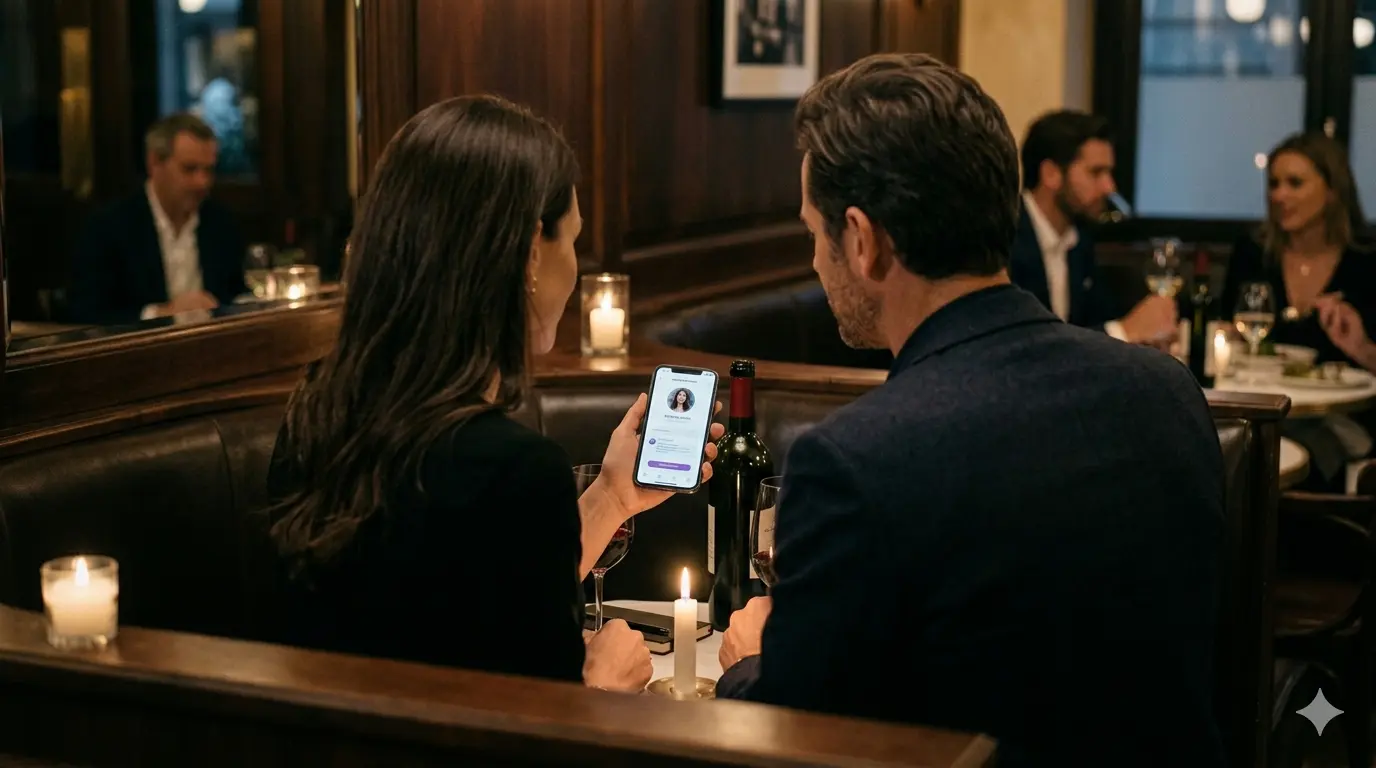
Dating apps are actually built around visibility. A profile is created, then placed into a shared environment where users are simultaneously browsing and being browsed. Even with privacy settings, the structure is still public-facing within the platform. Photos, preferences, and personal details are repeatedly surfaced, evaluated, and sorted at scale.
Due to the setup, users are not only choosing others, they are also being continuously evaluated. For many people, this feeling of being searchable and accessible in real time introduces discomfort, even if the experience is normalized culturally.
How confidential matchmaking differs
Confidential matchmaking operates in a different way. There is no public profile and no searchable presence. Information is not distributed broadly or placed into a shared pool. Instead, it is held privately and shared only when there is a specific reason to do so.
With matchmaking, introductions are made directly and intentionally. Nothing is broadcast. The process is designed to reduce exposure rather than increase visibility.
It is important to understand that confidentiality is not a single policy but an ongoing practice. From the first conversation, there are clear boundaries around how information is recorded, stored, and used. Personal details are shared only when relevant to a potential introduction. These conversations are ongoing and part of a two-way relationship between the matchmaker and client.
When introductions are considered, information is carefully curated. Not every detail is shared with every party. A matchmaker makes decisions about relevance, timing, and context. Communication with third parties is handled in a way that preserves anonymity until both individuals agree to move forward.
Discretion also includes how conversations are framed externally. In social or professional contexts, a matchmaker understands when to remain silent, when to generalize, and when not to engage at all.
Who benefits from privacy-first dating
There are several groups of people for whom discretion is paramount to a positive dating experience.
Executives are common clients who seek discretion because their professional lives are visible and interconnected. Dating apps can create unnecessary overlap between personal and work identity, which they prefer to avoid.
Public figures have a more obvious need for confidentiality. Their visibility can especially complicate early stage dating. Attention or speculation can interfere with genuine connection.
Immigrants or individuals embedded in tight-knit communities may prefer privacy because social visibility carries cultural or family implications. There can also be genuine safety concerns if someone is undocumented or if their status can be questioned.
Recently separated or divorced individuals often want to re-enter dating without their transition becoming publicly visible. Privacy allows for emotional processing without external commentary, without the risk that your former in-laws or a next partner of your ex hear you are dating. In extreme cases, privacy may be part of keeping them safe from an ex.
LGBTQIA+ adults who are not fully out may require careful handling of identity information. Confidential matchmaking allows them to explore relationships without forced disclosure or public exposure.
Late bloomers sometimes feel self-conscious about limited dating experience. A private setting removes comparison pressure and allows them to engage without feeling evaluated against perceived norms.
How vetting supports safety and trust
Vetting is an essential part of matchmaking. It begins with direct conversations that explore intention, readiness, and relational patterns. This is not a single screening moment but an evolving assessment over time.
When appropriate, additional context is gathered from professional networks. Other matchmakers or trusted contacts who have previously interacted with a person may provide insight into consistency, behavior, or relationship history. This creates a form of external validation that supplements the interview process.
Where relevant and appropriate, information may also be cross-checked through social connections. The goal is not surveillance, but clarity. Each layer adds perspective, reducing reliance on self-reported information alone.
The combination of these inputs produces a more complete understanding than any single conversation or profile could provide. Instead of navigating volume, clients engage with a small number of carefully selected introductions.
Closing thoughts
Discretion in dating is not about secrecy for its own sake. It is about reducing unnecessary exposure in a process that is already emotionally significant. Confidential matchmaking offers a structure where privacy is built into the system, not added as an afterthought.
No responses yet