
Neurodivergent Dating: How Matchmaking Can Help
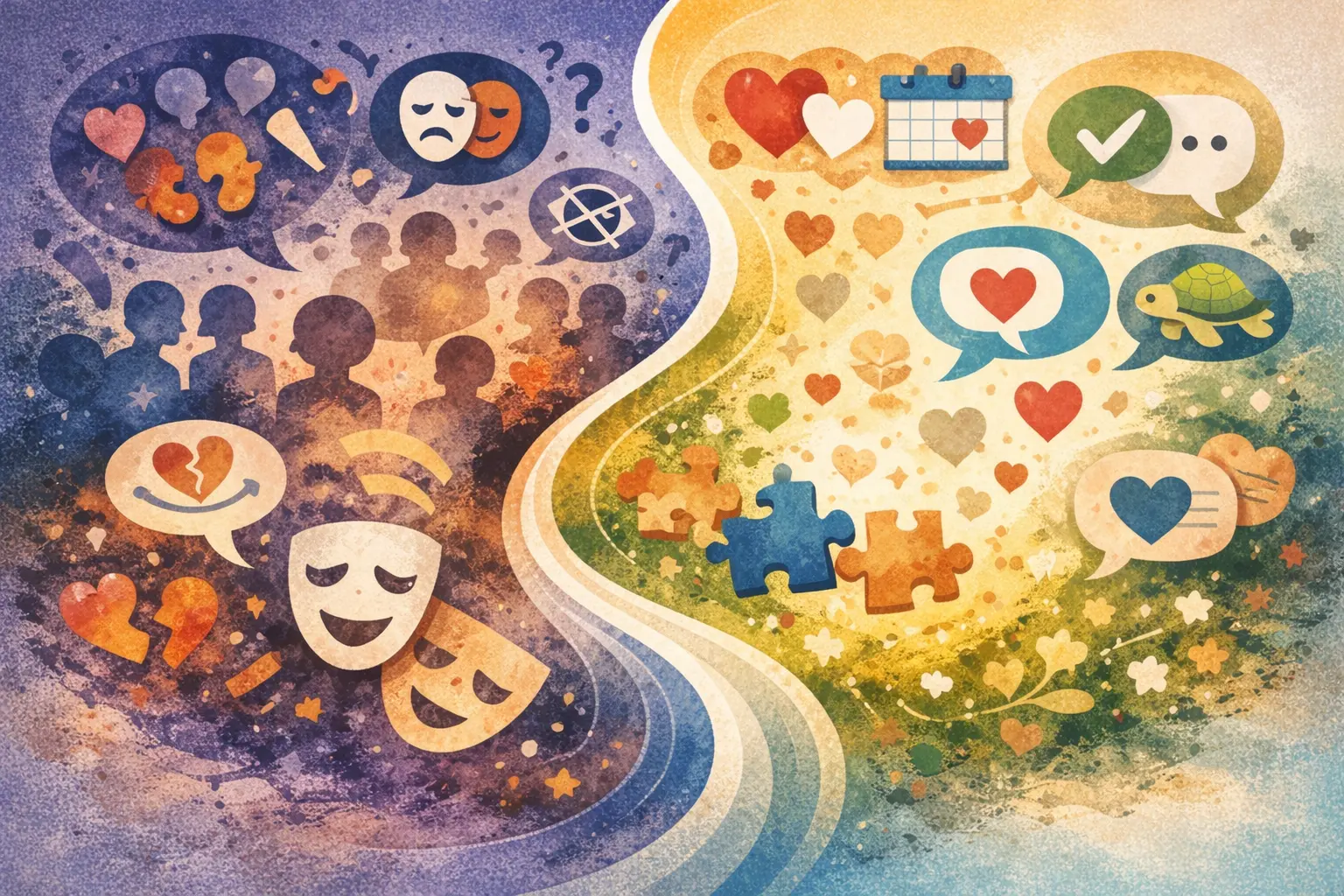
Dating can feel overwhelming for anyone, but for neurodivergent adults, the challenges are often amplified. Social cues, ambiguous expectations, and the pressure to mask natural behaviors can make traditional dating exhausting or discouraging. Thoughtful, adaptive matchmaking provides a supportive alternative by honoring communication styles, boundaries, pacing, and personal strengths. By prioritizing authenticity and focusing on what energizes each individual, matchmaking helps neurodivergent clients form meaningful, lasting connections. This article explores common experiences, challenges, and strategies for making dating more manageable and rewarding.
Table of contents
- The Unique Challenges of Dating for Neurodivergent Adults
- Burnout, Social Cues, and Masking
- The Role of Parents and Support Systems
- Adaptive Matchmaking and Strengths-Based Approaches
- Realistic Expectations and Authentic Connections
The Unique Challenges of Dating for Neurodivergent Adults
I meet hundreds of singles, and I can tell you that it is overwhelming for everyone to navigate the complicated world of dating. But for neurodivergent people, I have found that the challenges can feel even more acute.
Dating is filled with what feel like unspoken social rules and norms. There can be a sensation that everyone else has been given an instruction manual but you. While that is not true, it is a valid and common personal experience I hear from clients.
Diagnoses like ADHD, autism and anxiety-related conditions come with real, measurable cognitive differences that affect communication, sensory processing and social dynamics. These show up with work, friendships, and family, so naturally they will also show up in dating.
Burnout, Social Cues, and Masking
One common way is burnout. Imagine scrolling through a dating app, trying to gauge compatibility from a few photos and a short bio, while simultaneously managing anxiety about every message, decoding ambiguity in tone, or masking natural behaviors to fit perceived norms. It can feel so exhausting and discouraging and make you want to opt out from the whole thing.
In-person interactions, like at a dating event, are another complicated situation to navigate. Neurodivergent people know that social cues that others take for granted may be missed completely. This knowledge can create anxiety about whether the person you are talking to even wants to talk to you at all, causing more awkwardness in the interaction. These things compound and result in a harder experience of dating overall.
Masking is another common way I have seen neurodivergent people navigate dating. They may try to model their behavior after what they perceive as “typical” peers rather than showing their true selves. While it may feel like a necessary strategy, it comes at a cost. Masking can be exhausting, stressful, and ultimately unsustainable. The truth is that when you bring your full self to dating, including your personality, your quirks, and the ways you naturally interact, you attract people who genuinely appreciate and resonate with who you are, rather than connections built on performance or pretense. I know that can be hard to believe, though, when you may have experienced rejection in the past.
The Role of Support Systems
If you are a parent of an adult child with neurodivergence, it can be frustrating to watch your child struggle with dating. This is often an area where your guidance is naturally limited, given the personal and vulnerable nature of intimacy and romantic connection.
For friends, it can be hard to watch a neurodivergent friend struggle with dating. You may want to help, offer advice, or set them up with someone you think would be a good match, but it can be tricky to know how much to step in. Dating involves personal boundaries, emotional vulnerability, and experiences that people need to navigate on their own terms or with the help of professionals.
Adaptive Matchmaking and Strengths-Based Approaches
I see modern matchmaking as a supportive, adaptive alternative to dating apps, in-person experiences. Dating is never one-size-fits-all and thoughtful matchmaking goes beyond algorithms or swipes. A matchmaker can account for personal pacing, emotional bandwidth, and the boundaries that are essential for comfort and safety. For neurodivergent individuals, that means taking the time to understand how each person interacts with the world, what energizes them, what can feel overwhelming, and how they most authentically express interest, affection, and curiosity.
I work from a lens of strengths-based framing, encouraging clients to identify what energizes them, what they enjoy, and how to leverage their unique traits in dating. Once, I noticed that what energized a client was her love of board games. She would light up when we talked about them or when showing me her huge collection! I decided to accompany her to a board game conference where we interacted with potential matches and gently debriefed afterwards to draw lessons from the interactions. This was a safe, supportive way for her to experience something she would enjoy with a trusted companion, and gain insights from the experience.
I have also learned how to adapt my process to accommodate many communication styles. This is true of my work with anyone, but it becomes especially important when I have a neurodivergent client. Adapting communication styles can mean adjusting the pace of conversations, offering clear expectations up front, using multiple modes of communication (text, email, phone, or video), and checking in frequently to make sure information is understood and comfortable for the client. When appropriate, I include parents in the planning stages of my work and use their valuable insights to shape my interactions with their adult child.
Realistic Expectations Bring Authentic Connections
One key tool I use is setting realistic expectations. Neurodivergent people may benefit from redefining what “success” in dating looks like, including pacing and milestones. There may be a perception that things “should” move at a certain pace, or that certain mile markers must be crossed for a match to be successful. I reject that simple framing. I had one client who took six months to have a first kiss with the woman who became his girlfriend. Every relationship unfolds differently, and having a matchmaker by your side to show that a variety of timelines are healthy and normal can be a relieving feeling.
Dating as a neurodivergent adult can feel overwhelming, exhausting, and full of uncertainty, but it does not have to be a journey you navigate alone. A matchmaker can honor your communication style, pacing, boundaries, and together can approach dating in a way that feels sustainable and more aligned with who you truly are.
No responses yet